
An unforgettable journey does not end with the flight home. It lives on through the countless photos and holiday memories you have collected. The biggest challenge is often not letting these digital treasures gather dust on a memory card or hard drive, but transforming them into a unique keepsake. A thoughtfully designed travel photo book captures the emotions of your experiences, allowing you to relive every moment each time you turn the pages. Start by thinking of your journey or road trip as a true adventure, one that deserves to be told from the first page to the last.
The Magic of the Wild: A Travel Photo Book for Your Botswana Safari Adventure
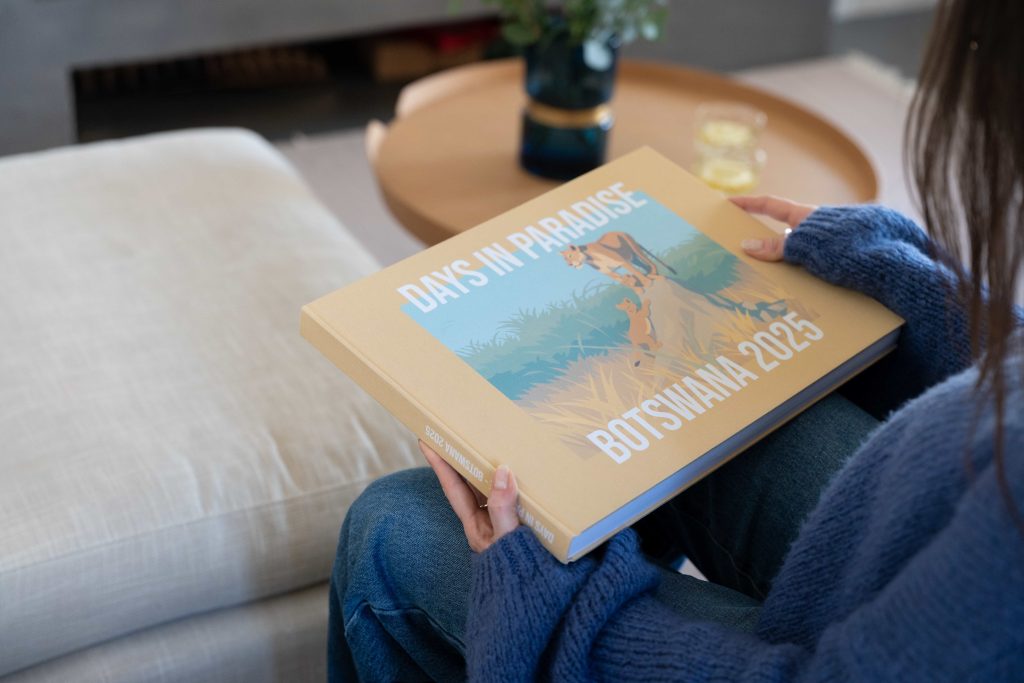
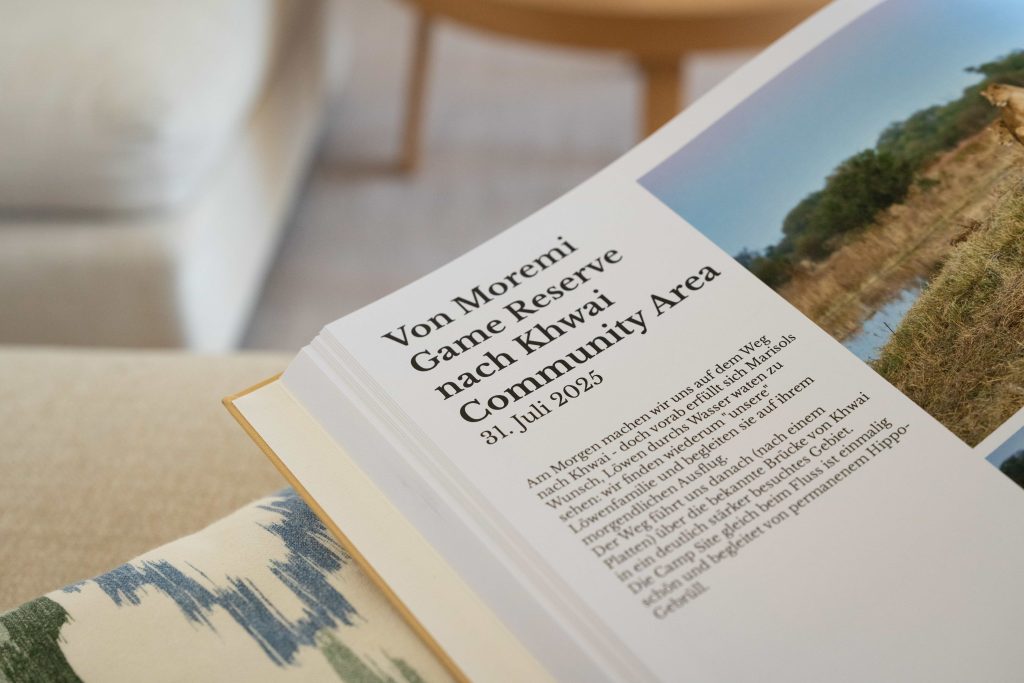
A family safari in Botswana, for example, is a truly unforgettable experience that deserves a special presentation. If you want to create a travel photo book from your latest adventure, simply placing wildlife photos one after another is not enough. The real magic comes from the combination of breathtaking landscapes and shared family experiences.
Choosing the Right Photos and Telling a Story Through Your Photo Book
To turn your journey into a captivating story, focus on variety. Combine sweeping landscape shots in landscape format with striking portrait images. The true emotional highlights, however, are your family’s reactions. The children’s amazement as they spot wildlife on safari or the shared laughter during an evening card game at the campsite are just as important as the lion hidden in the tall grass or the turquoise-blue hotel pool. Create a natural narrative flow: begin with the soft light of early morning, continue with the jeep drive, capture the highlight of a wildlife sighting, and end with a spectacular sunset. Whether it is a safari or another destination, the storytelling approach remains the same.
Which Format Brings Nature Photography to Life?
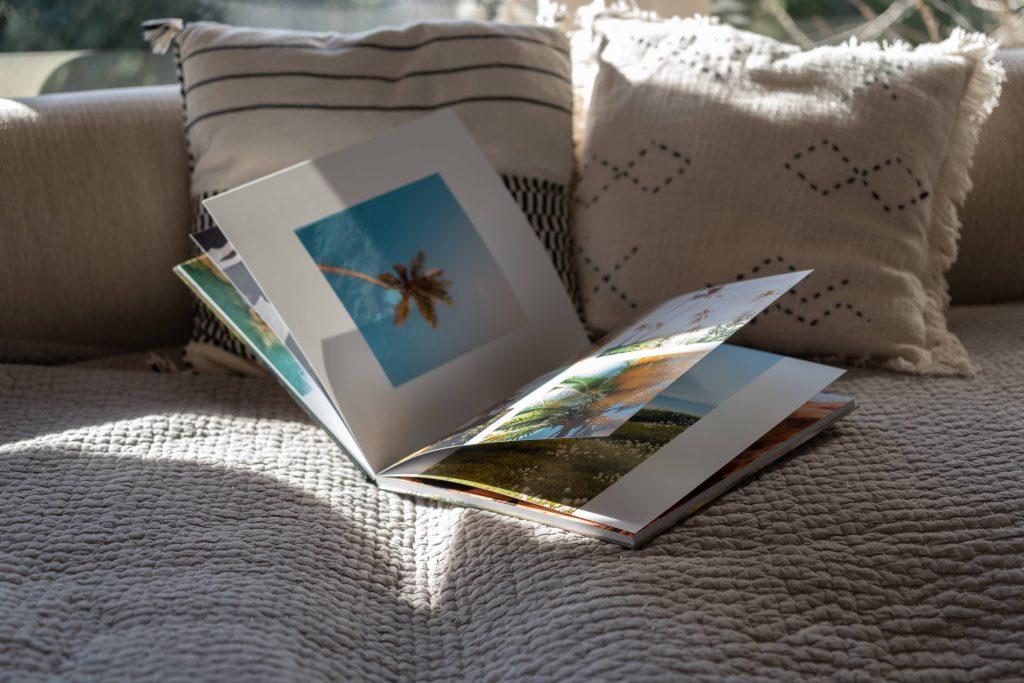
For detailed nature and wildlife photography, a portrait-format travel photo book with a layflat binding is highly recommended. This binding allows breathtaking panoramic landscapes to stretch seamlessly across a double-page spread without losing important details in the centre fold. Premium photo paper also ensures brilliant colours and razor-sharp contrast, making the warm earth tones of Botswana, for example, appear vibrant and lifelike.
Document Long Journeys in a Travel Journal
If you spend several weeks or even two months travelling through a country, you will collect an incredible number of unforgettable memories. Turning all this material into a well-organised travel journal requires a clear structure and a thoughtful combination of images and text.
Should You Organise Your Journey by Days or Destinations?
For longer trips, a purely chronological structure based on individual days quickly reaches its limits. A hybrid approach works much better. Divide your project into chapters based on the regions or destinations you visited. Within each chapter, you can then follow the events in chronological order. This creates a clear structure while guiding the reader naturally along your travel route.
Combining Photos, Notes and Routes Effectively
If you want your travel photo book to capture the charm of a genuine scrapbook, the interaction between visual elements and personal notes is essential. Helpful photo book design tips and the clean layouts of modern templates make this easy to achieve:
- Leave some intentional white space on your pages so your snapshots can breathe and there is room for short texts.
- Add small anecdotes, dates or memorable encounters as text blocks.
- Include a small map at the beginning of each new chapter to show your location.
- Use scanned or photographed tickets or short descriptions of local dishes as additional design elements.
The Art of Simplicity: Selecting the Right Photos for Your Travel Photo Book
The most difficult task after every holiday is choosing the right photos. When narrowing thousands of holiday pictures down to your favourite travel memories, it helps to be ruthless. Look at a series of ten similar shots and keep only the one that best captures the atmosphere. An overcrowded layout quickly feels busy and distracts from what really matters. A few large, impactful photographs create a much stronger emotional effect than many small images squeezed onto one page. It also helps to organise your photos into folders by destination or experience before opening the design software, choosing a suitable template and starting the actual creation of your travel photo book. This saves time and helps preserve the narrative of your story.
Frequently Asked Questions (FAQ) About Travel Photo Books
Which font is best for longer texts in a travel journal?
Clean sans-serif fonts are ideal for modern layouts, while classic serif fonts suit a more traditional book style. Decorative handwritten fonts should only be used sparingly for headings or short quotations, as they become difficult to read in longer paragraphs.
How can I prevent my design from looking cluttered?
Work with a consistent grid and limit yourself to no more than two or three different page layouts. A continuous background, ideally white or a very subtle shade of grey, creates a calm appearance and keeps the focus entirely on your photographs.
Can I still change the number of pages while designing my photo book?
Yes. In most cases, you begin with the minimum number of pages and can add or remove pages flexibly throughout the design process, depending on how much space your photos and text actually require.