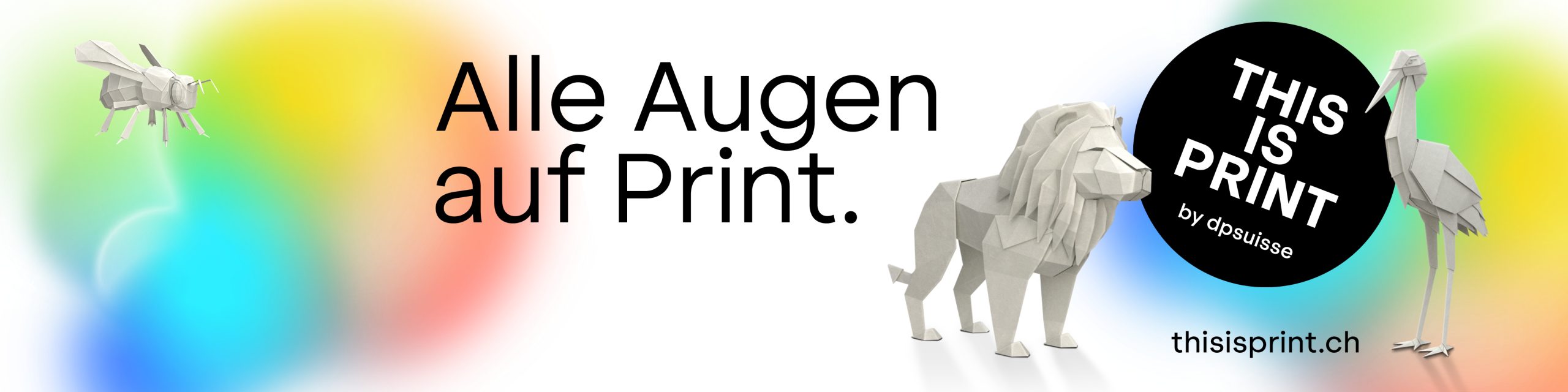
Print is dead? You might get that impression if you believe the many prophets out there. In reality, print has been with us for centuries and remains indispensable even in the digital age. Print stands strong and is more relevant today than ever before. This is exactly where the «This is Print» campaign by dpsuisse comes in, clearly showing: print can do more than many think.
In six categories, it gets straight to the point why physical media not only keeps up, but often comes out ahead: it is versatile and creates real added value in modern communication.
In this blog, we present the most exciting insights from the campaign, including honest answers about print from Christian Burkhardt, CEO of Bubu / Bookfactory and President of dpsuisse, the association of the graphic industry.
Christian, what is most often misunderstood about print in your opinion?
«Print is often described today as outdated, and there is a perception that it has been made obsolete by ‘digital’; but it’s not print vs. digital – it’s about using the right applications for both channels. We need both, and they complement each other perfectly. There are areas where ‘digital’ has clearly prevailed – but there are numerous examples where print has retained or even expanded its relevance.»
Love is Print
Some moments deserve more than a quick click or a fleeting scroll. When we take the time to design a card ourselves and consciously send it, something with real meaning is created. It’s similar with a photo book: memory becomes tangible page by page. Colors that shine. Paper that feels good. A binding that holds together everything that matters to us. That pause while flipping through the pages, that re-immersing into past moments – no digital album can replace that.
Printing is not an obligation, but a choice: for what lasts. For memories you don’t just see, but feel.
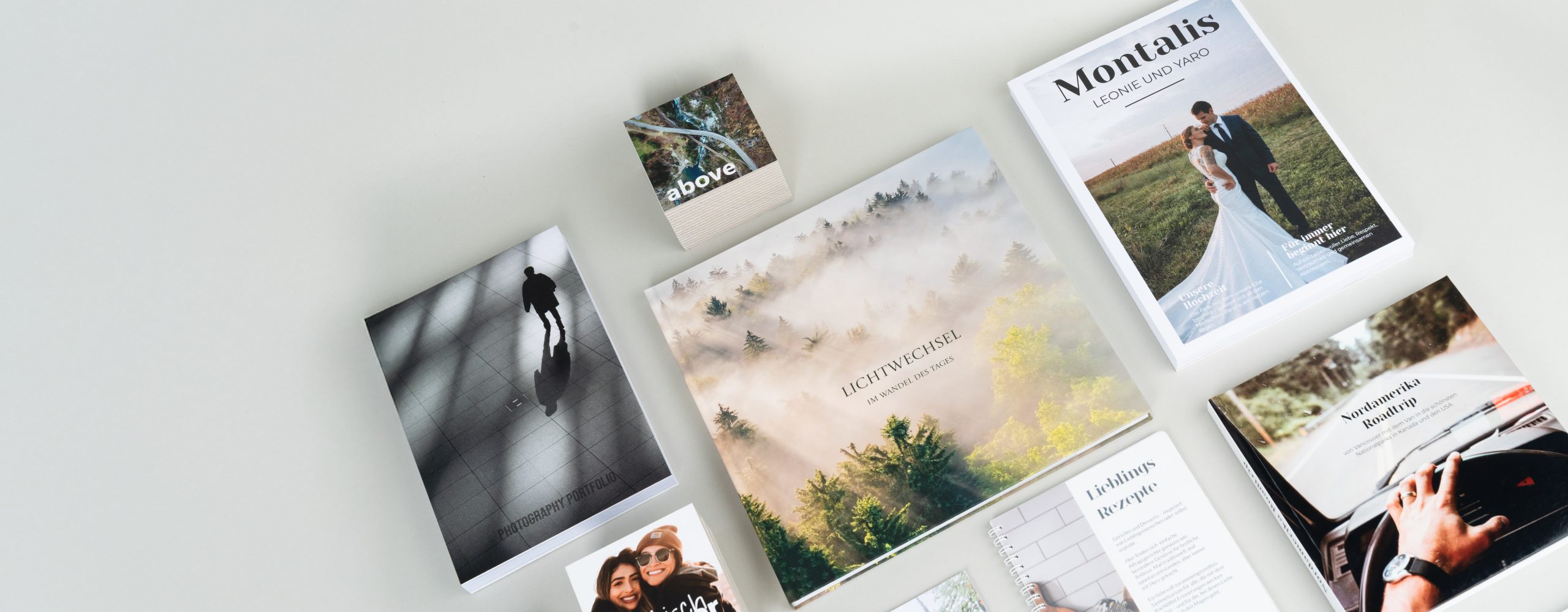
We also had the opportunity to contribute here. One of the protagonists in the video is actually a product from Bookfactory – and no, it’s not the baby… The photo book the two are holding was produced by us and illustrates how print carries emotions.
Is there an example where print is particularly emotional for you?
«Photo products turn images into emotions: high-quality, tangible, and lasting. Because it is only in print that memories come alive – as an experience that lasts and cannot be replaced by digital simplicity.»
Friendship is Print
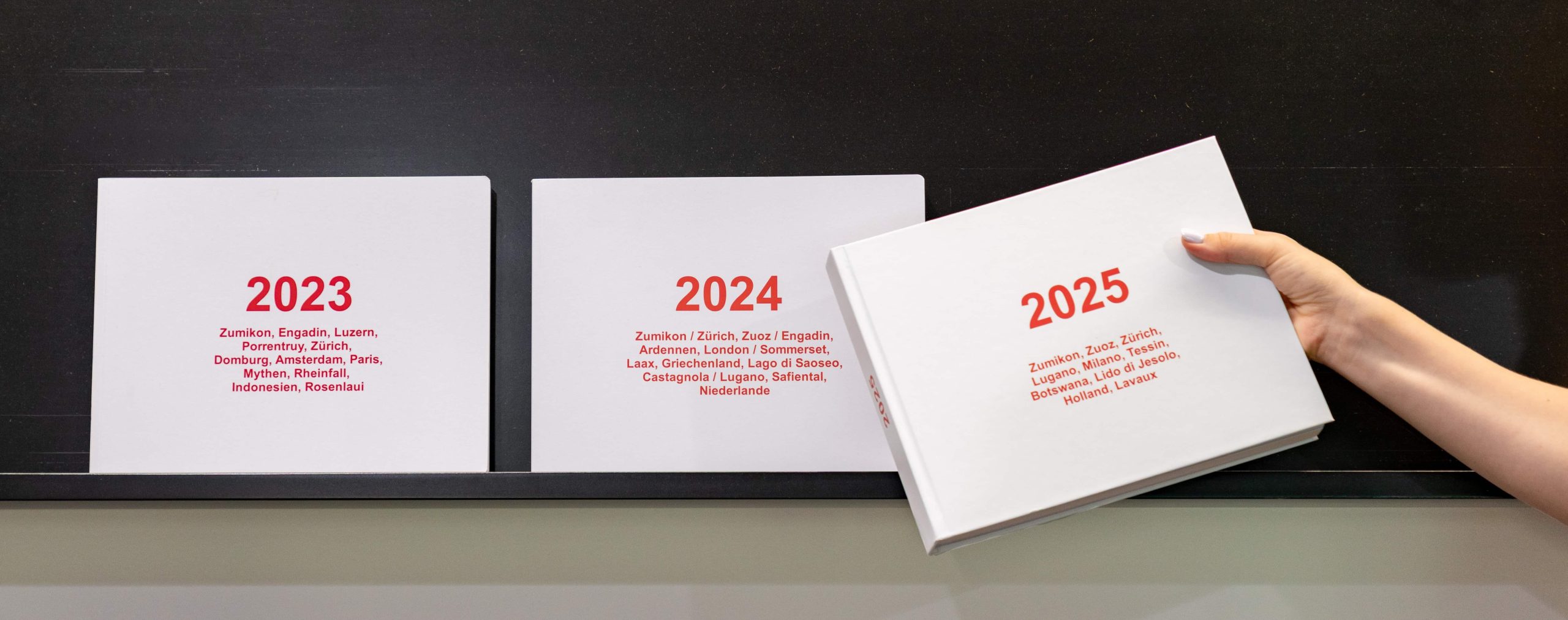
A game night, diving into a book together, or going through a travel album page by page – these are the moments where we are truly present. Without distraction, simply together. Print brings us back to connection. It makes memories tangible and shows appreciation. Because what takes time and effort has meaning.

A handwritten card is more than paper and ink. It is a conscious pause – a small gesture that lasts and often says more than many digital messages.
Has print become a more conscious means of communication for you?
«In many applications, absolutely: a handwritten letter, a personal photo book, or a creative tactile invitation conveys appreciation, quality, and exclusivity – digital communication is purely focused on efficiency, which is why well-used print products are perceived more consciously through their complementary qualities.»
Future is Print
Paper actually deserves a better image today than many assume. Behind a printed product there is often a well-thought-out, sustainable cycle. In Switzerland, wood from responsibly managed forests is used, mostly thinning wood. Old trees are selectively removed so that younger ones can grow – for healthy forests. And it continues: paper can be recycled up to ten times and remains in the cycle. Surprisingly, print performs better in terms of CO₂ than digital, which requires a lot of energy through servers and storage. This is shown by the current analysis by the Öko-Institut Freiburg.

Swiss printing companies also operate in a particularly resource-efficient way. Print is therefore not an obsolete model, but a conscious use of resources.
Where do you currently see the most exciting developments in print?
«There is still a lot happening in the area of personalized print runs; runs are becoming smaller, yet we are still able to offer almost all bookbinding specialties – and developments in digital printing also allow for more individuality in content, which we as bookbinders can easily implement (e.g. individual sheets with personalized content).»
Impact is Print
Print is more than information – it stays. On the table, in your bag, or between the pages of a book. While digital advertising often appears only briefly, print remains present and has a longer-lasting effect. This creates a purchase impulse that doesn’t disappear immediately. Every contact makes a brand more familiar, especially in combination with digital channels. Print creates connection.

Its strength: it appeals to multiple senses. You see it, feel it, experience it. Weight, texture, and even scent turn it into more than information – an experience that stays in your mind.
Are there situations where you would clearly say: this is where print is unbeatable?
«Of course! Whenever it comes to emotions, print almost always wins. Information can be digitized, but communication cannot – print is a colorful and tactile contrast to the digital uniformity. You don’t need a print product, but you want it!»
Creativity is Print
The foundation is crucial. Paper determines how a product feels and appears. Whether natural or elegant – the material tells a story. It becomes even more exciting with finishing touches: surfaces come alive, details stand out, shapes such as die-cuts draw attention. This turns an idea into an experience. Often, it’s the subtle details like embossing that add depth and ensure something is not just seen, but experienced.
Print is not just the final result, but part of the creative process. Ideas emerge when you feel materials, combine colors, and experiment with formats. Paper makes thoughts visible.
Is there a (print) project or example that has particularly inspired you?
«There are countless – especially books, of course, to which we at Bubu / Bookfactory have a strong connection. Every book tells a story that comes to life through its content, design, and binding. I am repeatedly inspired by individual photo books from our customers, as well as particularly creative and uniquely designed B2B projects.»
Success is Print
Print is a strong growth partner for companies. It brings brands from the screen into people’s everyday lives – where real encounters happen and closeness is created. This very closeness makes relationships valuable in the long term.

While digital channels provide reach, print builds trust. The full effect only emerges through the combination: visible, effective, and measurable. Companies that combine both get more out of their marketing.
What would you advise a company that hardly uses print so far?
«A categorical refusal to use print reflects a mindset that clearly falls short – it’s a missed opportunity. Skillful use of print creates a lasting impression and offers market differentiation that can hardly be achieved with digital means alone. Attributes such as appreciation and quality can be conveyed by print like no other medium.»
The dpsuisse campaign makes it clear: print has lost none of its value – quite the opposite. Print vs. digital? The wrong question. The two are not competitors, but a really strong team. Whether used together or in parallel, they always work. And they unleash the most power when they reinforce each other instead of replacing one another.
Christian, what do you wish for the future of the print industry?
«That we can continue to bring so much joy to our customers with our products. At Bubu (and in print), we bind emotions!»

About Christian Burkhardt
Christian Burkhardt is the third-generation CEO of Bubu / Bookfactory as well as President of dpsuisse. He firmly believes that the most beautiful memories in life deserve to be preserved and bound into a book. True to the motto: “We bind emotions – that’s what drives us.”
About dpsuisse
dpsuisse is the umbrella organization of the Swiss print and communication industry. As a professional and employer association, political business association, and technical industry body, it represents the interests of the sector vis-à-vis politics, administration, trade unions, and suppliers.